
The North American plastics landscape is currently undergoing a transformation driven by the dual engines of innovative technology and robust policy frameworks. As the region grapples with the complexities of the circular economy, two primary areas of focus have emerged:
- the technical challenge of handling difficult plastic waste streams and
- the systemic challenge of reshaping national recycling infrastructures
In terms of policy, there has been a significant expansion of Extended Producer Responsibility (EPR) laws across Canada, Mexico, and the U.S. These EPR systems shift the financial and operational burden of waste management onto producers, incentivizing design efficiencies and material innovation. Commercially, they reward companies that adopt circular practices early, while creating competitive pressure on those slower to adapt. While the scope and requirements vary (by province in Canada and by state in the U.S.), EPR is a key tool in driving this region’s transition towards a circular economy.
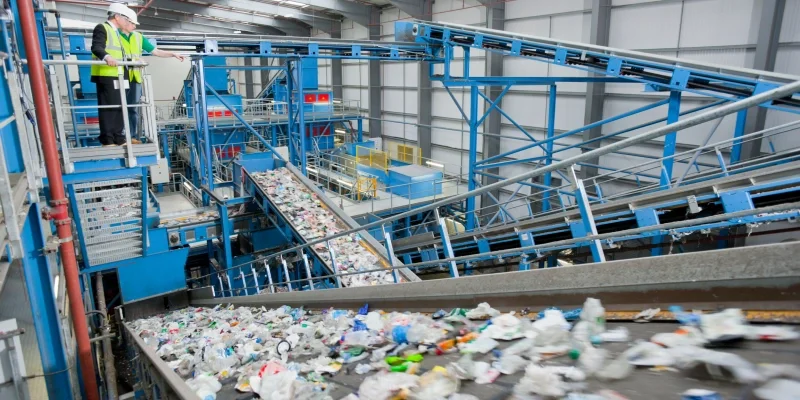
The Canadian strategy: Policy, collaboration and innovation
Canada is positioned at the forefront of North America's plastics circularity transition, actively working to reshape its plastics system through a combination of policy, collaboration, and innovation. This effort extends beyond government action, bringing together stakeholders across the value chain. Organizations such as the Chemistry Industry Association of Canada (CIAC) and the Canada Plastics Pact (CPP) play important roles in advancing circular economy initiatives and aligning industry efforts.
The focus in Canada is increasingly centered on understanding the true performance of the recycling system. By analyzing collection, recovery, and recycling data, stakeholders can better identify where the current system succeeds and where improvements are needed. For example, in late 2023 the CIAC and CPP, along with several other industry groups and not-for-profit organizations, completed the first phase of the Perfecting the Recycling System for Flexible Plastic Packaging (PRFLEX) study. By identifying areas for improved stakeholder collaboration and infrastructure enhancement, this study provides a roadmap for advancing flexible plastic packaging recycling endeavours.
However, despite strong policy momentum, implementation remains uneven across provinces. Variations in EPR frameworks, collection systems, and recycling infrastructure highlight the broader challenge of translating national circular economy ambitions into consistent on-the-ground performance. Addressing these gaps will require greater coordination across the value chain, alongside sustained investment and improved data transparency to support informed decision-making and long-term system improvements.
This is where industry collaboration becomes particularly important. The collaboration between CIAC and CPP highlights a unified front. Both organizations actively engage with partners across the value chain to align efforts and drive systemic change. Companies such as Aduro Clean Technologies, for example, are contributing to this shift through innovation that supports more circular plastic solutions.
The United States: From ambition to performance
In the United States, 2026 marks a pivotal year as the focus shifts from passing legislation to on-the-ground performance. The pace of implementation accelerated significantly in May 2026 with 7 states (including California, Oregon, and Colorado) requiring packaging data submission and producer supply reporting during the same reporting period. This highlights how EPR is evolving from a legislative concept into an operational reality.
California remains the pacesetter for U.S. policy through SB 54, which mandates that all regulated packaging be recyclable or compostable by 2032. Furthermore, California is tightening "chasing arrows" labeling requirements, ensuring that only truly recyclable products carry the symbol. These policies are designed to stabilize recycled content markets and drive significant investments in domestic manufacturing.
Mexico’s plastics circular economy
Mexico has made notable progress through industry‑led EPR structures and nationwide collection programs, particularly for PET and rigid plastics. However, flexible and multilayer packaging remains a significant gap, as existing mechanical recycling infrastructure is not designed to handle these complex waste streams at scale.
As plastic consumption continues to rise, Mexico’s path forward increasingly depends on complementing its established collection systems with advanced recycling technologies that can recover value from hard‑to‑recycle materials. Strengthening collaboration between producers, recyclers, and technology providers will be essential to prevent leakage into landfills and the environment, while enabling Mexico to align more closely with broader North American circularity goals.
The rise of advanced recycling technologies
A major component of the North American strategy is the emergence of advanced recycling (also known as chemical recycling or molecular recycling). These processes can handle difficult plastic waste streams -- such as mixed films and multilayer packaging -- that traditional mechanical recycling cannot process.
The market for these technologies is projected to grow significantly, with some estimates reaching US$7.26 billion by 2035. The U.S. Plastics Pact supports the integration of these technologies but emphasizes that they must complement, not replace, traditional mechanical recycling. Under the EPA's Waste Management Hierarchy, the priority remains reduction and reuse, followed by mechanical recycling, with advanced recycling used only for formats that cannot otherwise be addressed.
Navigating a complex regulatory framework
Advanced recycling in the U.S. shows strong technological promise but faces a fragmented and uncertain regulatory landscape. Key regulatory considerations include:
Clean Air Act (CAA): Many pyrolysis and gasification facilities are currently classified as “solid waste incinerators,” which significantly increases compliance costs and slows deployment. However, the EPA is reviewing whether certain chemical recycling processes should be excluded from this classification, which could ease regulatory burdens.
Resource Conservation and Recovery Act (RCRA): A central question is whether advanced recycling should be treated as Waste management, or Manufacturing. To date, 25 states have opted for the latter, creating a more favorable environment for scaling.
Toxic Substances Control Act (TSCA): There is ongoing uncertainty about whether recycled chemical outputs count as “new substances” requiring pre‑market review.
This patchwork of federal and state-level regulations creates uneven operating conditions, increasing complexity for companies seeking to scale technologies across jurisdictions. In response, industry groups such as PLASTICS and Polystyrene Recycling Alliance (PSRA) and chemical manufacturers are advocating clearer definitions and exemptions, arguing that regulatory uncertainty hampers investment and commercialization. Industry stakeholders continue to advocate policy measures such as the proposed CIRCLE Act, which would provide a 30% investment tax credit for recycling infrastructure. Supporters argue that incentives of this type could help lower capital costs, accelerate investment, and strengthen domestic recycling supply chains if enacted.
Overcoming technical hurdles: The polyolefin challenge
While policy provides the framework, technology provides the tools. One of the most significant technical hurdles in North American recycling is the management of polyolefin waste. Polyolefins, which include common plastics like polyethylene (PE) and polypropylene (PP), represent a massive portion of the waste stream but have historically been difficult to process into high-quality materials.
The "tough challenge" of polyolefins is being addressed by new technology pathways aimed at converting this waste into high-value feedstock. Rather than simply "downcycling" plastic into lower-quality items, the goal is to break the material down into its basic chemical components.
Advanced technology pathways, including Hydrochemolytic™ Technology (HCT), discussed in industry forums including a recent Topsoe podcast are designed to address the inherent difficulties of polyolefin recycling. By transforming waste into high-value feedstock, the industry can create a truly circular loop where the output of the recycling process is as valuable as the original raw material.
Conclusion
North America’s plastics recycling transition will ultimately depend on how effectively policy alignment, infrastructure investment, and advanced technologies converge. While significant progress is underway, closing the gap between ambition and execution remains the defining challenge for the region’s circular economy.
References:
https://www.topsoe.com/knowledge-and-insights/podcasts/circular-plastic-podcast (Episodes ‘Whither Canada?’ and ‘Turning polyolefin waste into high-value feedstock’)
https://usplasticspact.org/wp-content/uploads/2025/11/2025_Chemical_Recycling_Position-Paper.pdf
https://resource-recycling.com/plastics-recycling-update-magazine/2026/02/19/state-policy-is-redefining-plastics-recycling-in-the-us/
https://www.klgates.com/2026-Regulatory-Outlook-Advanced-Recycling-1-14-2026