
The global transition from traditional linear resource consumption to a sustainable circular economy is accelerating through educational initiatives, regulatory mandates, and international agreements. In Canada, Circular Economy Month (CEM) expands upon historical waste reduction efforts to foster nationwide environmental awareness and community resilience. Meanwhile, legislative milestones such as the European Union's upcoming Circular Economy Act are legally binding industries to stricter material recovery and eco-design standards. Nations worldwide, including Japan, China, India, and Mexico are similarly replacing voluntary guidelines with mandatory national recycling quotas and accountability laws. Furthermore, efforts surrounding Plastics Pacts and the Global Plastics Treaty aim to unite stakeholders around measurable circularity targets.

Canada's Circular Economy month
How a waste reduction week grew into a month-long national awareness campaign.
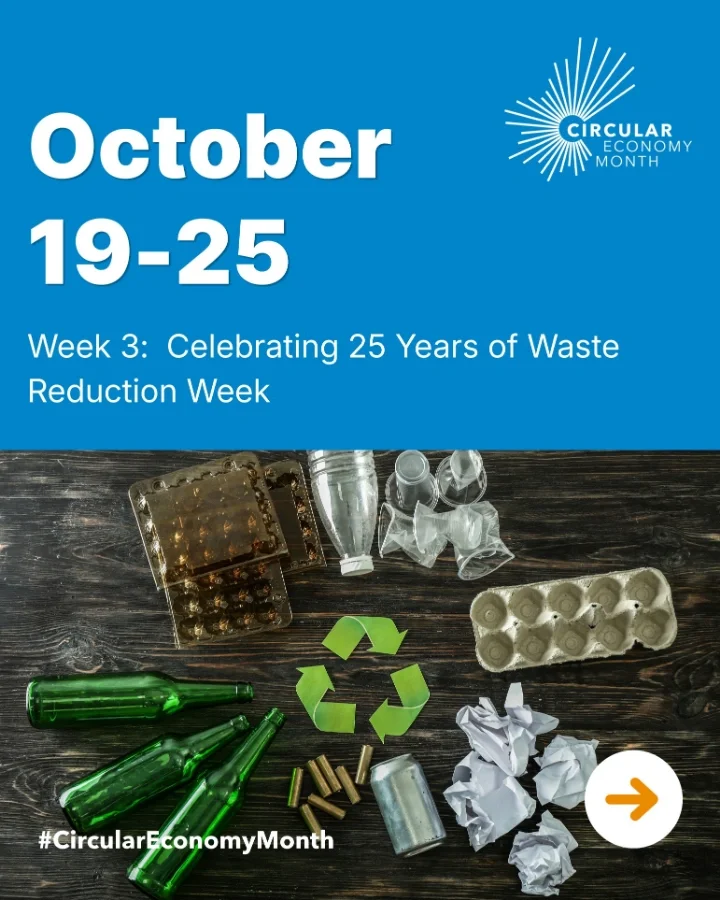
Evolving from Waste Reduction Week in Canada (established in 2001), CEM, organized by the Circular Innovation Council has grown into a month-long public awareness campaign.
Starting with a focus on recycling, it has transformed into Canada’s largest waste reduction public awareness campaign that promotes and celebrates individual and collective environmental efforts and achievements while encouraging new and innovative ideas.
|
 |
Public awareness is complemented by structural policy reform. A prime example is Ontario’s transition to full Extended Producer Responsibility (EPR) under modern blue box frameworks. As explored in our insight piece, From Blue Box to Circular Feedstock: Ontario's Recycling Reform, these regulatory shifts are fundamentally redefining what happens after items leave the curb, turning local municipal recycling streams into vital inputs for a circular future.
The shift toward a true circular economy is no longer just a domestic conversation or an idealistic corporate pledge. It is rapidly becoming a regulatory reality worldwide.
The European Horizon: The Circular Economy Act
What the EU's upcoming Circular Economy Act aims to change for materials, product design, and recovery.
Slated for adoption in late 2026, the EU’s upcoming Circular Economy Act (CEA) aims to establish a unified single market for secondary raw materials, drastically scaling up the supply and demand for high-quality recycled content within the EU. The Act builds on the second Circular Economy Action Plan (CEAP) and aligns with the targets as defined in regulations such as Ecodesign for Sustainable Products Regulation (ESPR) and Packaging and Packaging Waste Regulation (PPWR).
The CEA’s primary objective is to double Europe’s circularity rate from 12% to 24% by 2030. Focusing on packaging, vehicles, batteries, textiles, and electronics, CEA priorities include:
-
Simplifying EPR systems across member states
-
Strengthening collection and recovery of critical raw materials
-
Creating a level-playing field for circular products
-
Reinforcing eco-design requirements (durability, repairability, inclusion of recycled content...)
Global round-up: Circular economy in national regulations
How countries beyond Europe are moving from voluntary guidelines to national requirements.
The transition toward mandated circularity extends globally. Governments across the globe are moving beyond voluntary guidelines and embedding circular economy principles directly into national laws and industrial strategies. Countries like Japan, China, Mexico, and India among others have established national-level frameworks such as comprehensive circular economy acts and nationwide EPR mandates. These legally bind industries to specific recycling quotas, material recovery metrics, and circular design standards. Mexico, for instance, formalized this shift with its landmark General Law on Circular Economy, mandating circular design, national traceability and producer accountability.
In Canada, the Chemistry Industry Association of Canada (CIAC) is working with Environment and Climate Change Canada to develop recycled content requirements and broader circular economy policies.
In the United States, while federal agencies like the EPA guide national strategies on plastics and organic recycling, circular economy policies are driven primarily at the state and municipal levels.
Overall, the direction is clear – and it is circular.
Circularity spotlight: Closing the plastics loop
How Plastics Pacts, the Global Plastics Treaty, and technologies like HCT work toward a circular plastics economy.
Plastics are at the center of the circular economy debate. Their versatility and durability make them indispensable, yet challenging to manage sustainably.
To accelerate plastics circularity, the Ellen MacArthur Foundation (EMF) spearheaded the creation of Plastics Pacts across the globe. These pacts provide a framework for collective action, aligning stakeholders (governments, businesses, and NGOs) around measurable targets and timelines. Today, 12 Plastics Pacts exist in countries including the UK, France, Canada, India, South Africa, Mexico, and the US.
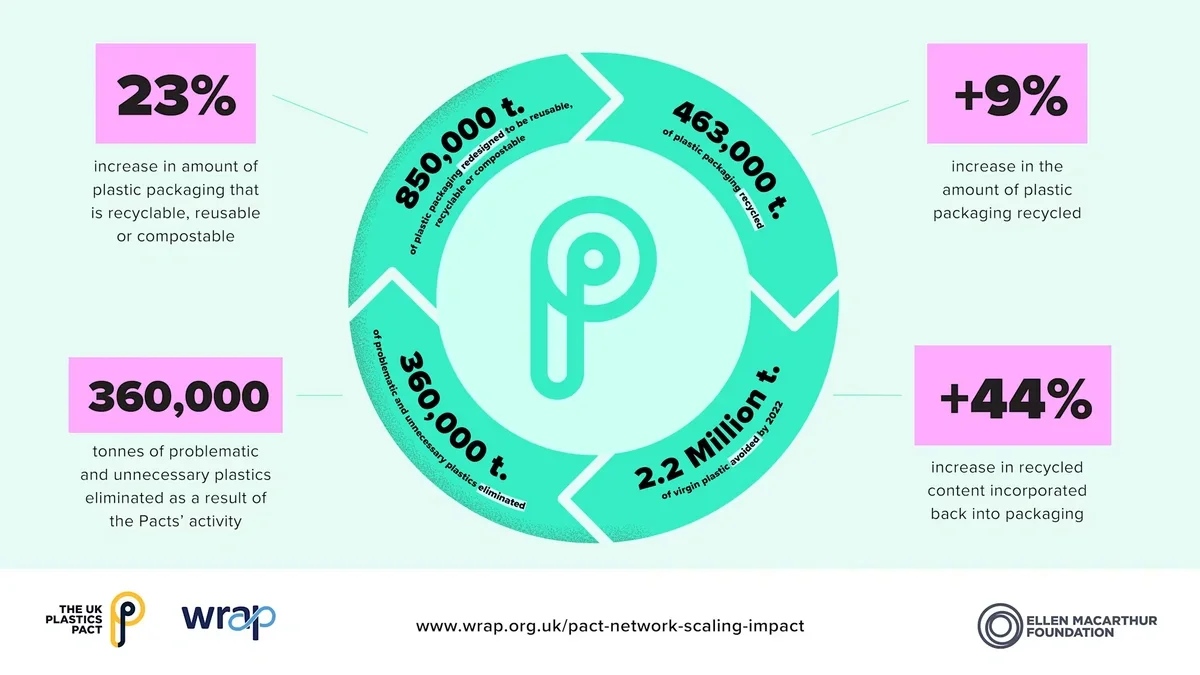
Internationally, a 2022 UN resolution initiated the Global Plastics Treaty process to create a legally binding agreement covering the full plastics lifecycle. Its goal is to reduce virgin plastic production, improve waste management, and build a circular economy.
As a member of the Canada Plastics Pact (CPP) and CIAC, we operate within the broader global framework pushing for a circular economy for plastics. We officially joined delegations as an industry observer at the INC-4 talks in Ottawa, underscoring the importance of:
-
Reducing plastic waste and promoting a circular economy through practical solutions and supportive policies
-
Preserving the essential benefits plastics deliver – from healthcare and clean energy to food security and innovation
Technical solutions such as Hydrochemolytic™ Technology (HCT), which we developed, will play an important role in meeting the circularity targets through chemical recycling. The technology is particularly suited to handling types of waste plastics traditionally considered hard-to-recycle. HCT complements mechanical recycling by processing complex waste streams that would otherwise be incinerated or enter landfills. Designed with an emphasis on controlled conversion chemistry, HCT retains carbon in usable feedstocks, contributing to a truly circular economy.
From Canada's Circular Economy Month to EU's Circular Economy Act, from national laws to Plastic Pacts and Global Treaty negotiations, circularity is no longer optional. It is now a core requirement for compliance, supply chain security, and economic viability.
References
https://circulareconomymonth.ca/
https://environment.ec.europa.eu/strategy/circular-economy_en#circular-economy-act
https://www.ellenmacarthurfoundation.org/plastics-pacts-scaling-impact
https://www.unep.org/en/inc-plastic-pollution