
Heating is still the main way to move highly paraffinic crude oil, and the reason is simple: every alternative available today gives up too much in yield, cost, or practicality.
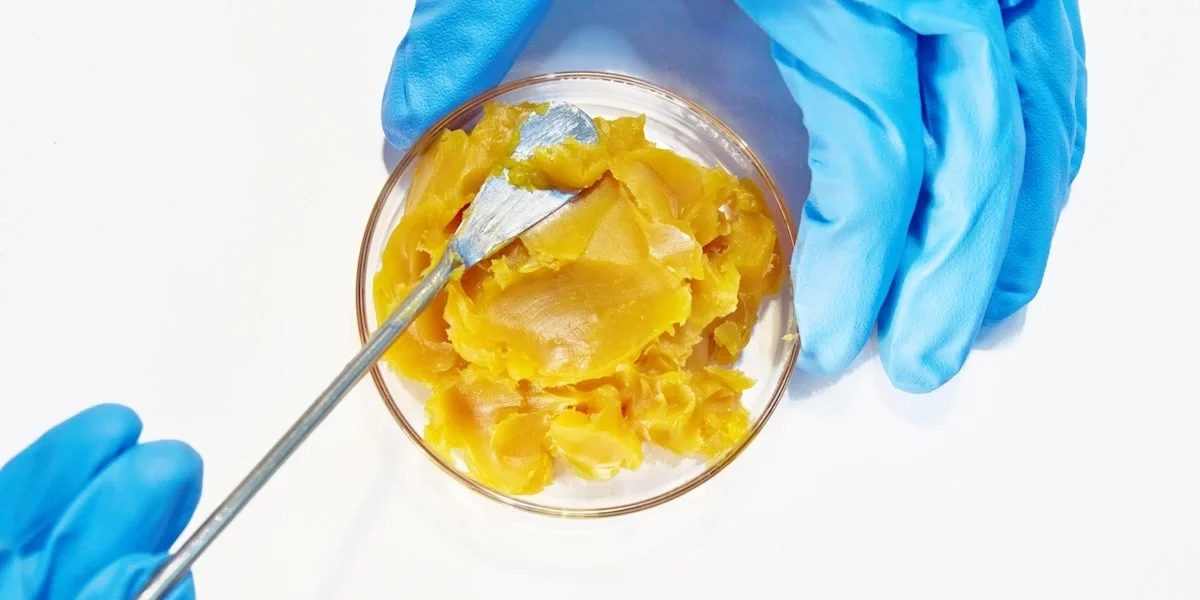
Paraffinic crude oils, which contain a significant fraction of straight-chain hydrocarbons, are estimated to make up 20 to 33 percent of crude oil production worldwide. They are found around the world and are an important part of the total energy landscape. Handling and transporting them can still be difficult, particularly when they have elevated wax content..
In our previous article, we looked at the established technologies for upgrading bitumen. Here, we turn to another crude that does not flow at ambient conditions, and look at the options for highly paraffinic crude (HPC).
Why paraffin wax blocks flow
Long-chain paraffins deposit as solid wax, and cold makes it worse.
Long-chain paraffin molecules in paraffinic crude frequently deposit as solid wax on the surfaces of lines and vessels. The deposits restrict flow and can block it altogether. Low temperatures make this worse, because waxes crystallize more readily as the oil cools. Moving paraffinic crude through subsea piping is one example of where wax crystallization is especially challenging.
For certain HPC, such as the yellow wax and black wax crudes from Utah's Uinta Basin, the long-chain paraffin content is high enough to cause solidification even at ambient temperatures. The pour point, or minimum temperature for flow, of certain HPC can be above 40 °C.
HPC and bitumen: Two crudes that do not flow, for different reasons
The similarities end at the pipeline.
HPC and bitumen share one trait: neither can be transported by pipeline in its native state, because neither flows at ambient conditions. Otherwise they differ. Bitumen is dense and sour, while many HPC are light and sweet. Bitumen resists flow because of its asphaltene content; HPC solidifies because of its paraffin content.
Because the causes are different, so are the solutions. Diluting bitumen with lighter hydrocarbons makes it pipeline-compatible. Diluting HPC does not have the same effect, because dilution does not prevent solid wax from forming and so cannot prevent impediment of its flow. Other flow assurance and upgrading techniques are needed.
Turning up the heat: The default, with limits
Heat keeps wax melted, but this is only practical over short distances.
Today, heating largely permits the flow of HPC. It keeps the waxes melted, but it is not practical beyond short distances. Heated lines can move crude from the well into primary tankage. This strategy cannot be extended to pipelines that traverse thousands of kilometres, or to railcars that might spend weeks on the tracks.
As a result, reliance on heating removes pipeline transport as an option for offtake. For rail transport, it also requires specialized railcars that are steamed on arrival, which adds infrastructure and energy costs and limits destinations to refineries and hubs with railcar steaming capability. Truck transport is limited to driving distances over which the crude stays warm enough to be pumpable on arrival.
These logistical hurdles add to costs and limit offtake opportunities, both of which depress the value of the crude, which is why there are strong drivers to improve its transportability.
Pour point depressants: Changing how wax crystallizes
Widely used, but limited when wax concentrations are very high.
In some cases, chemical additives called pour point depressants (PPDs) can manage paraffin content. As the name suggests, PPDs lower the pour point of a hydrocarbon stream so that it keeps flowing at lower temperatures. They do not prevent solid wax crystals from forming, and they do not meaningfully change the temperature at which the crystals form. They change how the paraffins crystallize.
Without a PPD, wax crystals grow in three dimensions, and small crystallites combine with others to form larger bodies of solid wax. A PPD promotes the formation of smaller crystals by disrupting crystal growth and limiting the agglomeration of crystallites.
PPD are widely used in crude oil production to facilitate flow, but they have limits. In HPC, the concentration of crystallizable wax can be so high that continuous, three-dimensional solid wax structures still form despite PPD-modified crystal growth, and they inhibit flow. In addition, while PPDs can improve bulk flow, they do not fully prevent wax from accumulating on pipeline walls, with associated flow restrictions.
Solvent dewaxing: Removing the paraffins
Highly effective for flow, but rarely applied to whole crude.
Another way to prevent HPC solidification is to remove the paraffins entirely, through solvent dewaxing. The waxy stream is first diluted with solvent, commonly a mixture of toluene and methyl ethyl ketone (MEK). The mixture is then cooled so that solid wax crystals form, and the waxes' poor solubility in MEK helps drive their precipitation. The crystals are removed by filtration or centrifugation, and the solvent is removed from the remainder of the crude.
Solvent dewaxing is highly effective at improving flow, but it is rarely applied to whole crude, for two reasons. First, removing the waxes causes a substantial yield loss. Second, it introduces new challenges in solvent recovery and in managing the waxes removed.
Cracking the wax: Hydrocracking and thermal cracking
Chemically altering the paraffins introduce new costs.
Methods that chemically alter the long-chain paraffin molecules themselves overlap significantly with the bitumen upgrading techniques in our previous article.
Hydrocracking can be used to chemically break down long-chain paraffins into smaller, more manageable hydrocarbons. It can also shift a portion of the refining yield from resid toward middle distillate and naphtha. However, hydrocrackers require high-pressure hydrogen gas, are expensive to operate, and are capitally intensive to build. For these reasons, applying hydrocracking at HPC production sites is not practical.
Thermal cracking and visbreaking apply thermal energy to break bonds in wax molecules, producing smaller hydrocarbon species. The conditions used for these methods are severe and generate substantial amounts of undesirable by-products such as coke and fuel gas, which reduces the yield of crude. The products also require hydrotreating to saturate the olefin (alkene) functionality formed in the process, which adds cost and complexity and limits applicability in the field.
Comparing the options
What each approach does for flow, and what it gives up.
|
Approach |
What it does |
Main limitation |
|
Heating |
Keeps waxes melted |
Practical only over short distances; excludes pipelines; needs steamed railcars |
|
Pour point depressants |
Alter how wax crystallizes |
Solid wax structures still form in HPC; wax still accumulates on pipeline walls |
|
Solvent dewaxing |
Removes the paraffins |
Substantial yield loss; solvent recovery and wax management |
|
Hydrocracking |
Chemically breaks down long-chain paraffins into smaller hydrocarbons |
High-pressure hydrogen; expensive to operate and build |
|
Thermal cracking and visbreaking |
Break bonds in wax molecules |
Coke and fuel gas by-products; hydrotreating needed |
Where we see an opportunity
Why the limits of today's options leave room for new technology.
The alternatives to heating that are commercially accessible for HPC today are lacking. Available technologies are ineffectual, uneconomical, or impractical. Heating therefore remains the main strategy, and HPC remains a disadvantaged resource with discounted value.
We see an opportunity here, and we are actively developing technology to effectively upgrade HPC, with potential for commercial application at the wellhead or anywhere else along the logistics chain. Using our proprietary Hydrochemolytic™ Technology (HCT), we aim to reduce logistical complexity by lowering pour point and improving flow characteristics, while improving overall resource value by shifting the refining yield of long-chain waxes toward distillate fractions.
Heat keeps paraffinic crude moving only as far as the heat lasts. The open question is how to move it with less reliance on heat—and that is where we see room for new chemistry.
Sources
Sousa, Ana M., Tiago P. Ribeiro, Maria J. Pereira, and Henrique A. Matos. 2023. "Review of the Economic and Environmental Impacts of Producing Waxy Crude Oils" Energies 16, no. 1: 120. https://doi.org/10.3390/en16010120